
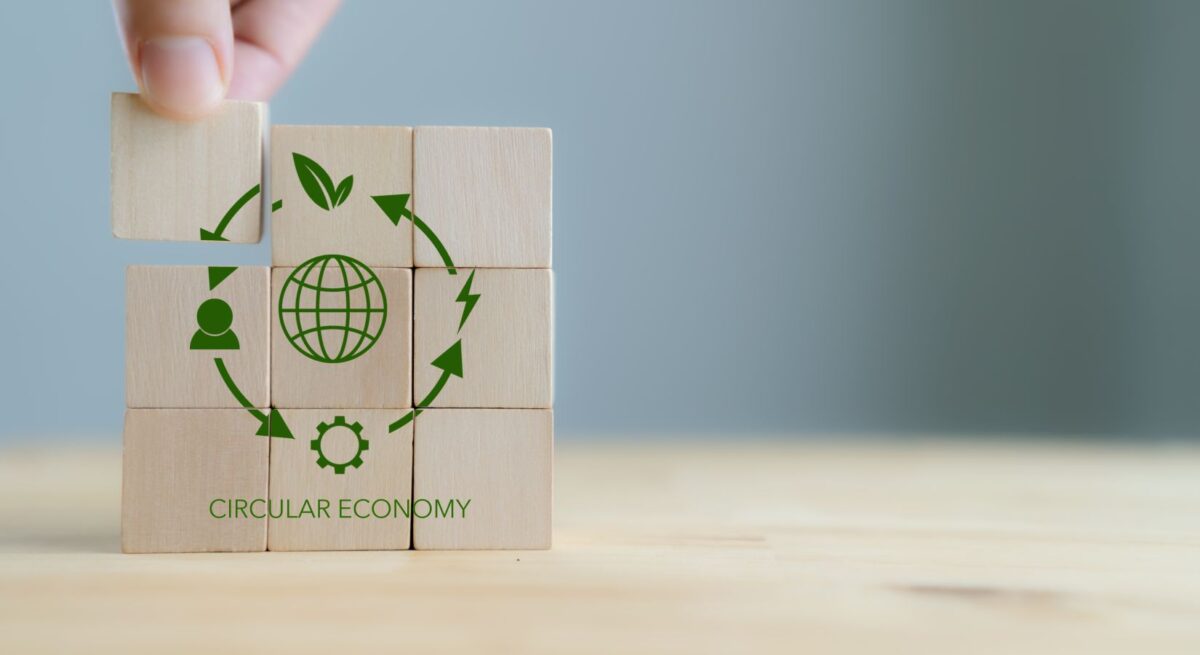
The transition towards a circular economy is not only about reducing environmental impacts, but also about building a stronger economy, reducing dependence on raw materials and creating a fairer society. But understanding circularity also means understanding what happens to products and materials after they are produced and used. The Butterfly Diagram, developed by the Ellen MacArthur Foundation, provides a visual representation of these flows and shows how materials can remain in use rather than disposed.
Why do we need to switch to a Circular Economy?
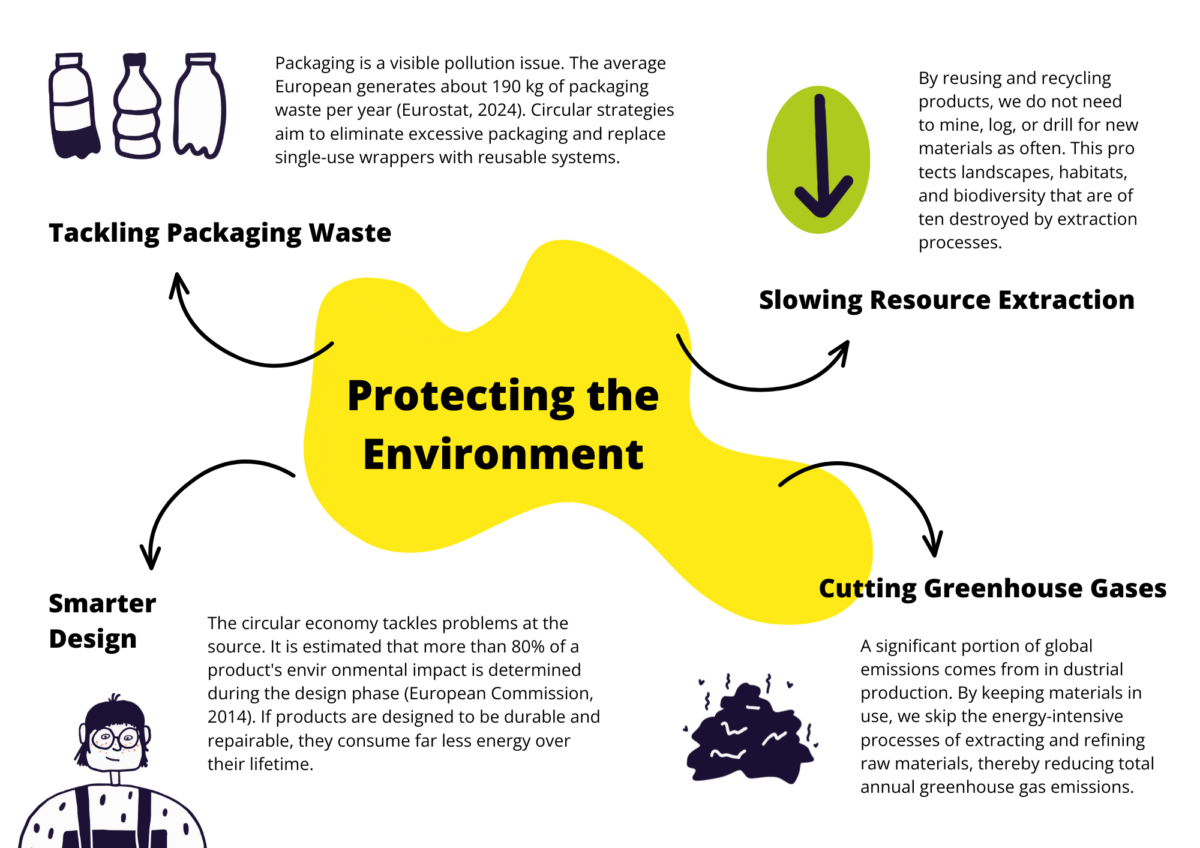
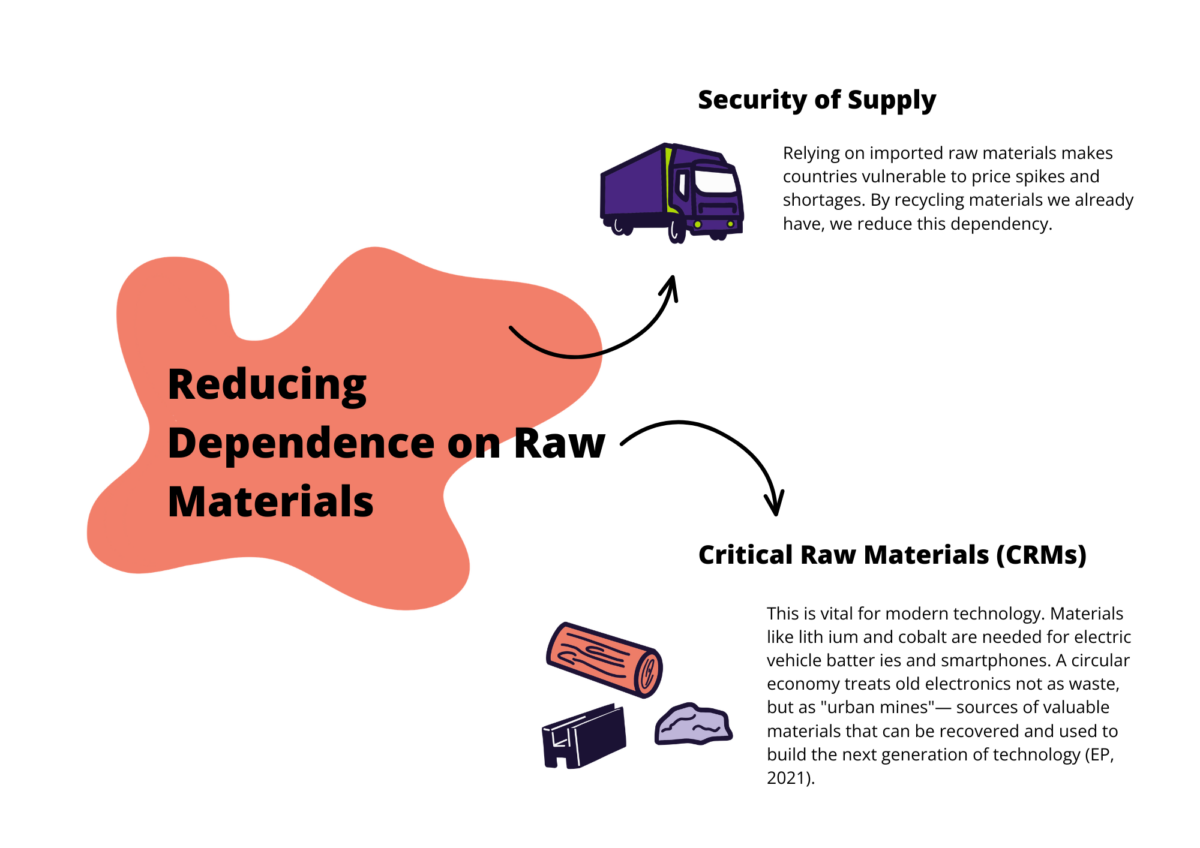
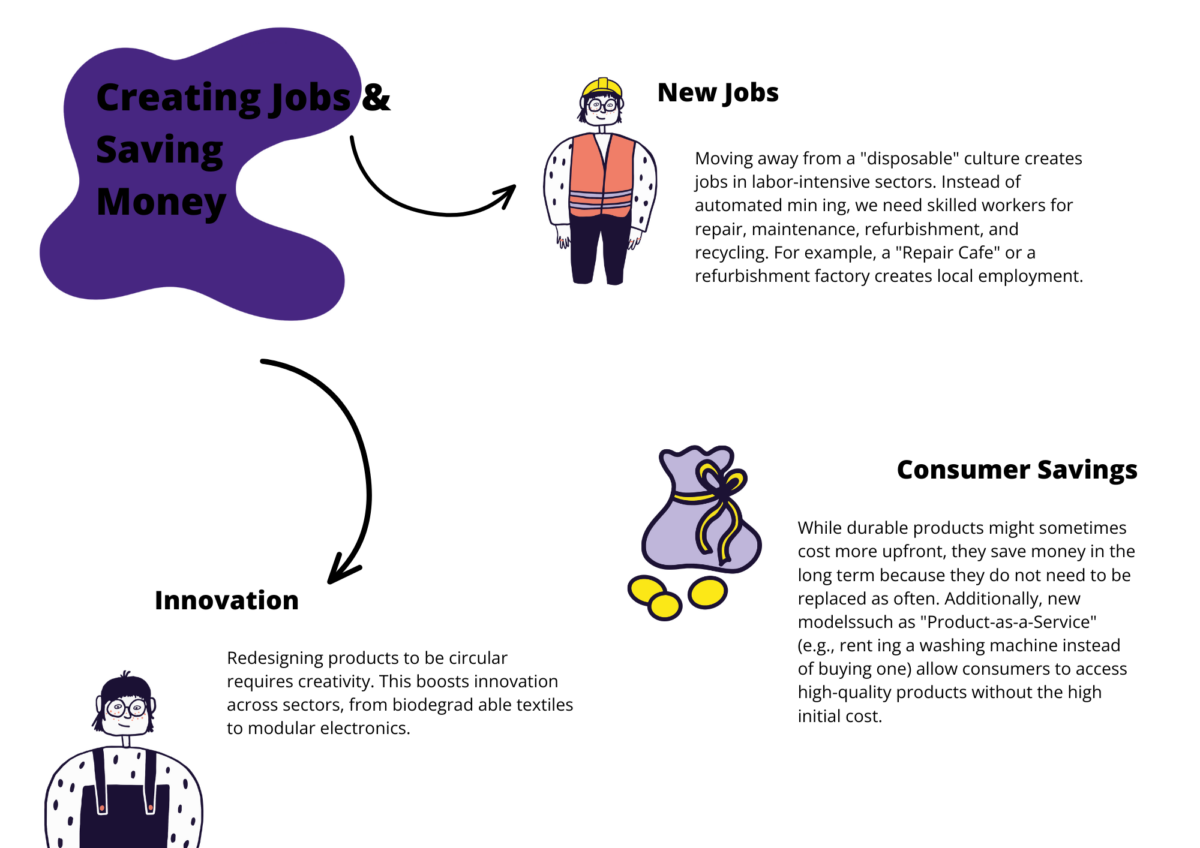
Transitioning to a circular economy is not just about saving the planet; it is a strategy to build a stronger economy and a fairer society. While the linear “take make-dispose” model wastes value, the circular model captures it. Implementing circular principles offers benefits in three major areas: protecting the environment, reducing dependence on raw materials, and boosting the economy.
Protecting the environment
Reducing dependence on raw materials
Creating Jobs & Saving Money
Visualizing the Circular Economy
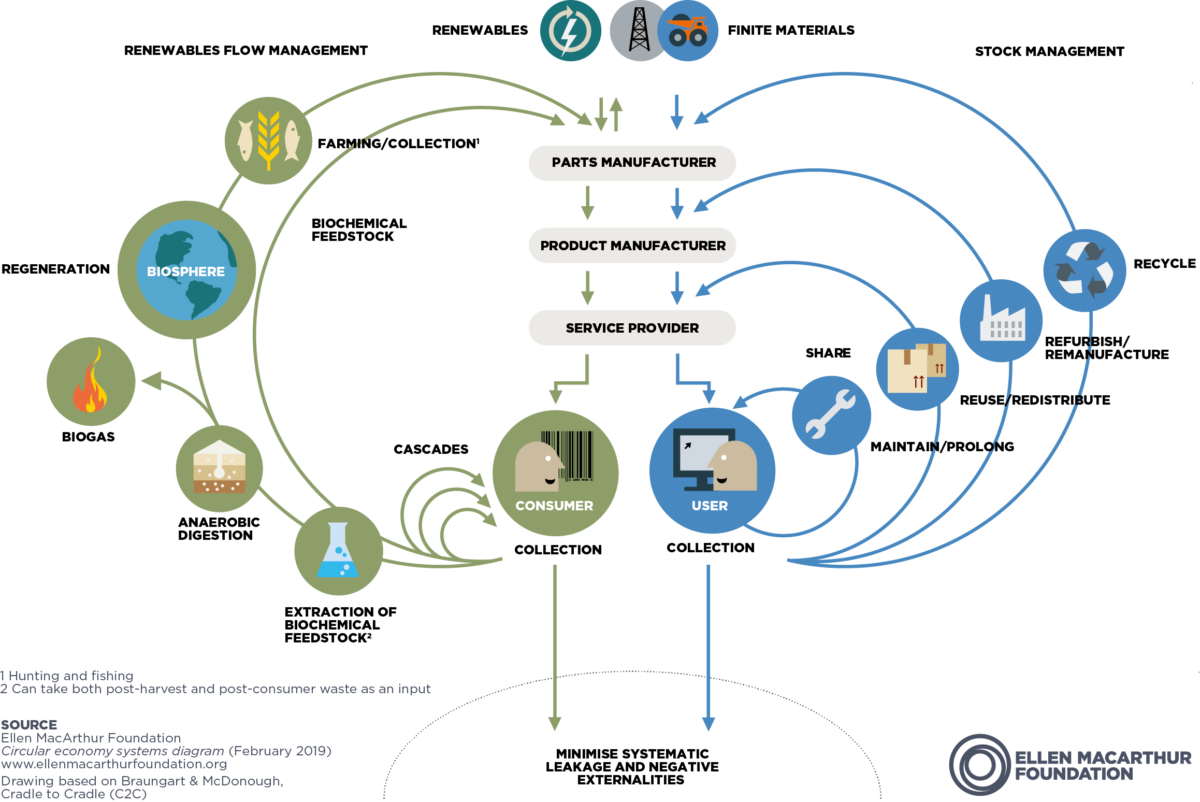
Understanding the circular economy can be challenging because it involves many different processes and material flows. A product may be repaired, reused, refurbished or recycled, while biological materials can follow a different path altogether. The Butterfly Diagram is the most famous visual representation of the circular economy. Developed by the Ellen MacArthur Foundation, it illustrates the continuous flow of materials through two distinct cycles: the Biological Cycle (left side) and the Technical Cycle (right side). The diagram illustrates a key goal: keeping products, components, and materials circulating in the economy for as long as possible. Its roots trace back to the Cradle to Cradle framework (Braungart & McDonough, 2002), which proposes that waste should be eliminated by treating all materials as “nutrients.”
Two cycles, two different types of materials
The Butterfly Diagram distinguishes between biological nutrients and technical nutrients. The left side of the Butterfly diagram represents materials that can biodegrade and safely return to the earth. This cycle applies mostly to consumables (things we consume), such as food and biological fibres (cotton, wood). The goal here is not just to do less harm, but to actively regenerate nature. The right side of the diagram focuses on durables (things we use, but do not consume), such as phones, cars, and washing machines. These materials cannot return to the soil, so they must circulate within the economy. The goal is to keep these items in the “inner loops” for as long as possible. The Butterfly Diagram makes one central idea of the circular economy visible: not all circular strategies are equal. The closer a product or material can remain to its original form and value, the less energy and resources are generally needed to keep it in use.