Bringing circular economy into education often means reaching beyond the school walls and connecting with people who work with these challenges every day. Companies, NGOs, universities and other organisations can turn abstract concepts into experiences, projects and real-world solutions. But building these connections takes more than finding someone to contact. It requires understanding what schools need, what external partners can contribute and how both sides can create value together. In this article, we explore how schools and external organisations can find each other, build meaningful partnerships and turn a first collaboration into something that lasts.
Finding the right partner
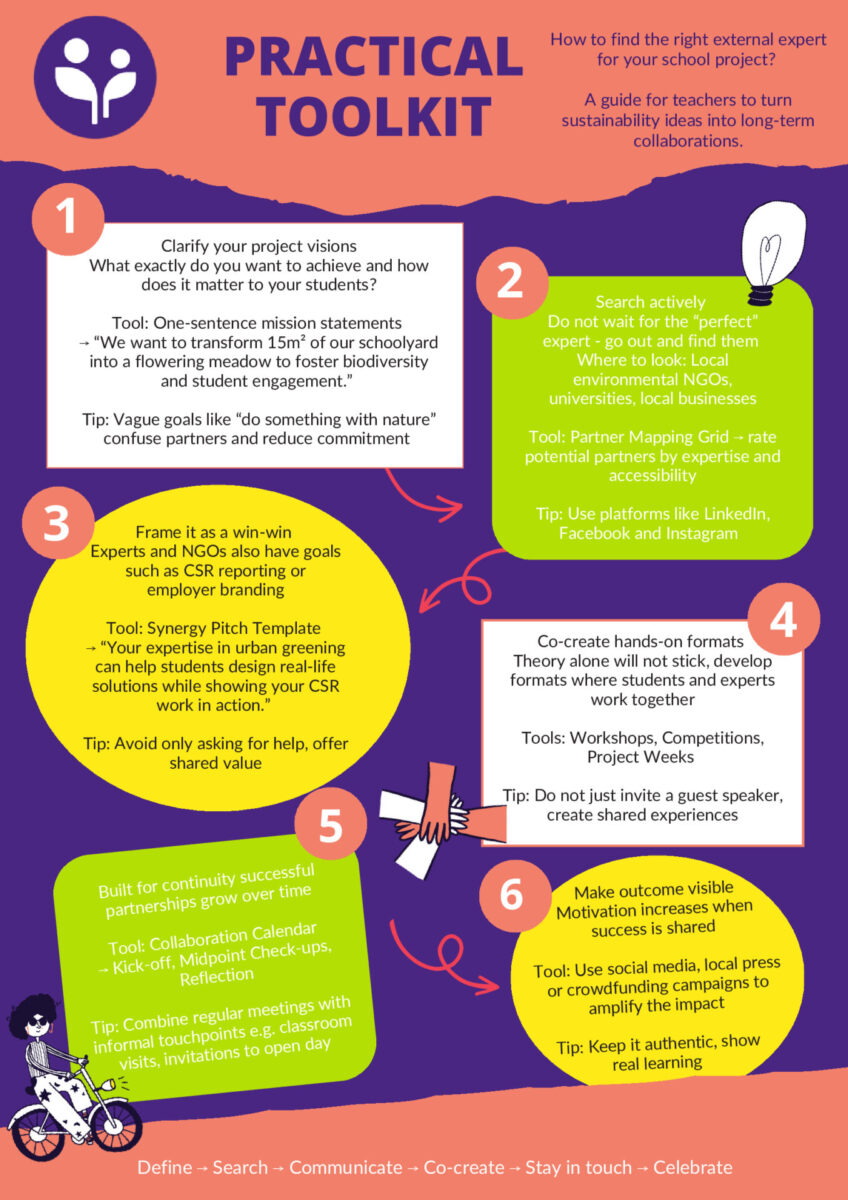
In our previous article, we looked at how schools can open their doors to the world outside the classroom. Companies, NGOs, universities and other organisations can bring new perspectives and practical knowledge into circular economy education. But how do you actually find these partners? It is easier said than done to cooperate with companies and NGOs. Who should you contact? What should you ask for? Why would an organisation want to work with your school? Questions over questions. In our Expert Transfer Strategy Handbook, schools can find a practical checklist called “Checklist for Schools: How do I find external experts?”. The toolkit provides teachers with step-by-step guidance on how to find suitable partners, co-create hands-on formats and maintain successful partnerships. From defining goals to celebrating outcomes, it supports schools in turning ideas into actions.
Create shared value
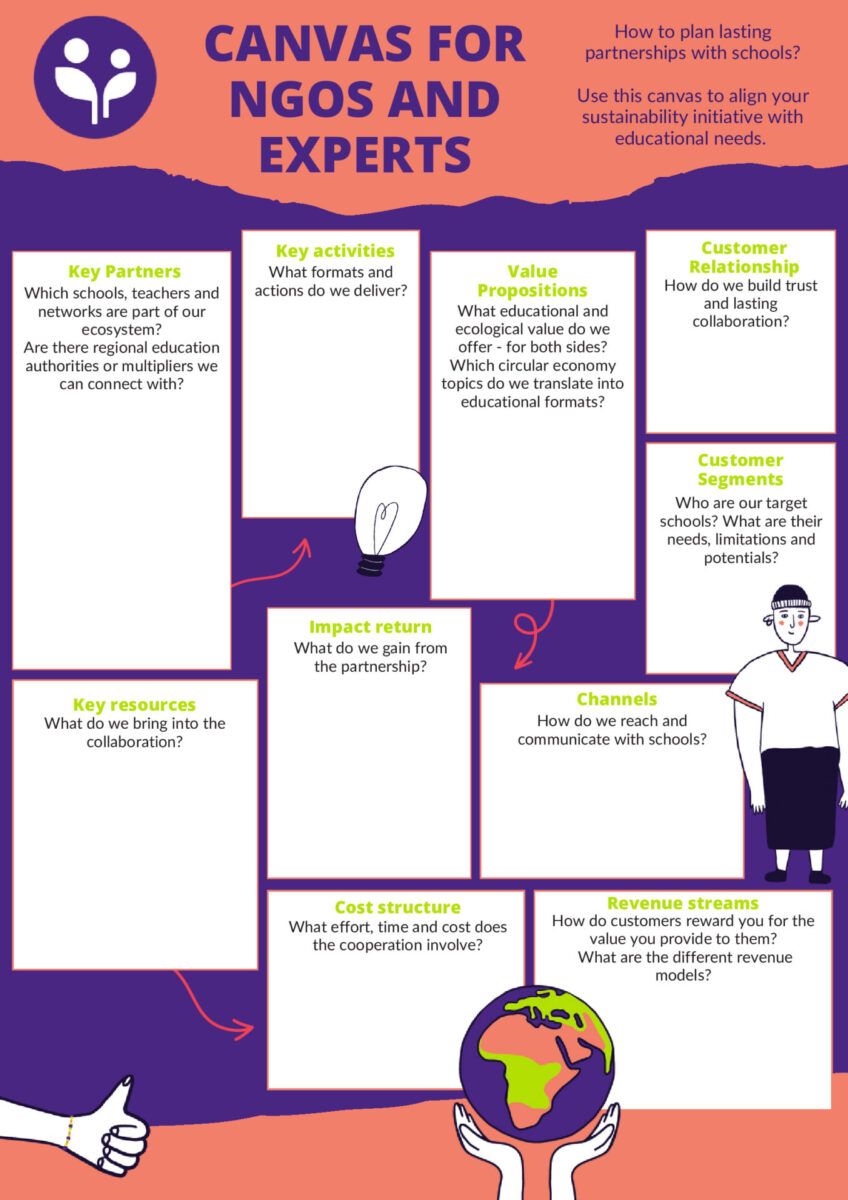
For a long-lasting and successful partnership, both sides should benefit from the cooperation. This is where the “Checklist for experts and NGOs: How do I work with schools?” can help. The canvas serves as a strategic planning tool for NGOs and experts who want to collaborate with schools. It helps align sustainability initiatives with educational needs by addressing factors such as partnerships, value creation, communication channels and long-term impact. The canvas ensures that collaborations are meaningful and tailored to school realities.
Maintain the connection
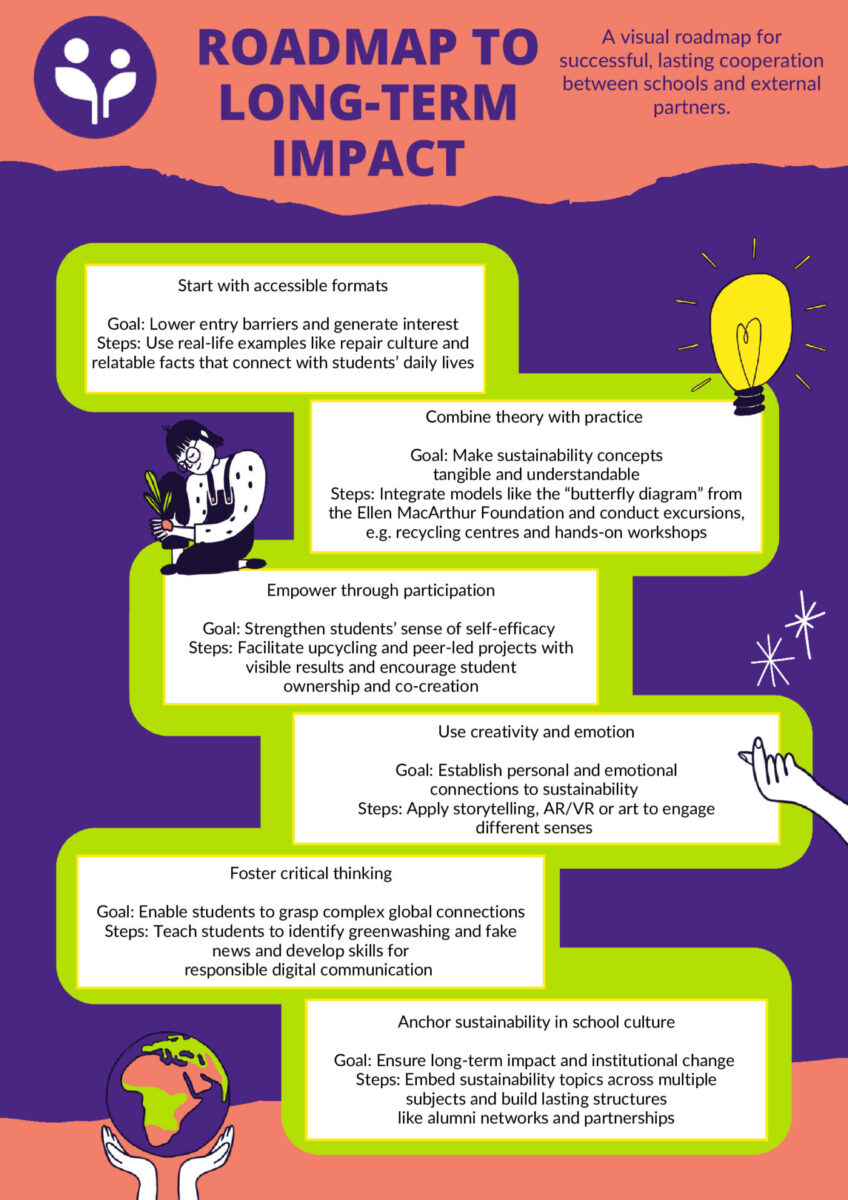
Long-term cooperation needs communication and follow-ups. The roadmap “Simple Steps towards Long-Term Co-operation” can give you ideas on how to achieve that. The roadmap outlines key steps for building long-term cooperation between schools and external partners to promote sustainability. It emphasises accessible formats, hands-on learning, emotional engagement, critical thinking and embedding sustainability in school culture. The goal is to empower teachers and partners to make sustainability a natural and lasting part of education.
Looking ahead
The climate crisis calls for courageous people. If we want young people to face the future with courage and confidence, we should empower them to understand and shape the world they live in. That requires a shift in how we think about education: not as a collection of facts, but as a space to explore real-world issues, ask critical questions and create solutions. The approaches shown here can only be a first step towards the integration of circular economy and sustainability in schools. Our long-term vision is for schools to act as catalysts for a circular society. For this to happen, circular economy and sustainability need to become a part of education rather than an additional topic squeezed into an already full curriculum. Teachers need the time, knowledge and support to make this possible, while schools need the right partnerships that connect them to the world outside their walls.