The transition towards a circular economy is not only a question of new technologies or business models. It is also a question of people. Young people entering the workforce need more than knowledge about sustainability. They need to learn how to question, create, collaborate and turn sustainable ideas into everyday actions. But how can schools teach these skills when curricula are already full, teachers face increasing workload and practical learning is often missing? Instead of fitting another topic into an already full curriculum, sustainability needs to become part of the way young people learn. This can be achieved if schools, companies and NGOs work together to turn circular economy education from theory into practice.
Knowing is not the same as doing
We often talk about sustainability as something young people need to know. They should know about climate change, recycling, resource consumption and the circular economy. But is knowledge enough? Knowing that fast fashion consumes resources does not automatically mean buying second-hand. Knowing that plastic should be recycled does not mean knowing what actually happens to it after it enters the waste system. And knowing that companies should become more sustainable does not necessarily mean knowing how to contribute to that change once entering the workforce. The discussion with experts from companies showed an important point: young people need more than knowledge. They need skills that allow them to turn knowledge into action. How can we achieve that?
Learn with others!
Rome was not built in a day. And it was not built alone either. Everything requires collaboration. Young people should be given the opportunities to learn through projects where they can participate, experiment and co-create instead of simply listening. Imagine learning about textile waste by reading a chapter about it and looking at a pixelated photo. Now imagine taking an old T-shirt and turning it into a bag yourself. Much more appealing, right? The knowledge may be the same, but the experience is not. Upcycling projects, zero-waste campaigns, competitions, hackathons or repair workshops give young people the opportunity to develop solutions in collaboration with others where ideas can be shared.
Learn to repair!
We live in a world where nearly everything can be replaced. Every broken object can be bought again. Easy, fast, and convenient. Repairing requires a different mindset. To roll up your sleeves and repair something instead of throwing it away requires patience, creativity and practical knowledge. It is important that young people learn practical skills, as they are the basis for a culture of repair and upcycling. Digital skills should not be overlooked either. For example, young people should be familiar with the use of apps for resource sharing, online campaigns and tools for sustainable projects.
Learn to see the bigger picture!
Behind every product is a system: raw materials, production, consumption, waste and, ideally, another life. Young people should therefore understand the interplay between ecological, economic and social aspects. They should be able to look at product life cycles, supply chains and material flows and understand how individual decisions can affect global resources. This kind of systematic thinking is particularly relevant when entering the workforce. Above all, these competences require learning to take personal responsibility in order to be able to make sustainable decisions and anchor them in the social environment.
Schools face challenges
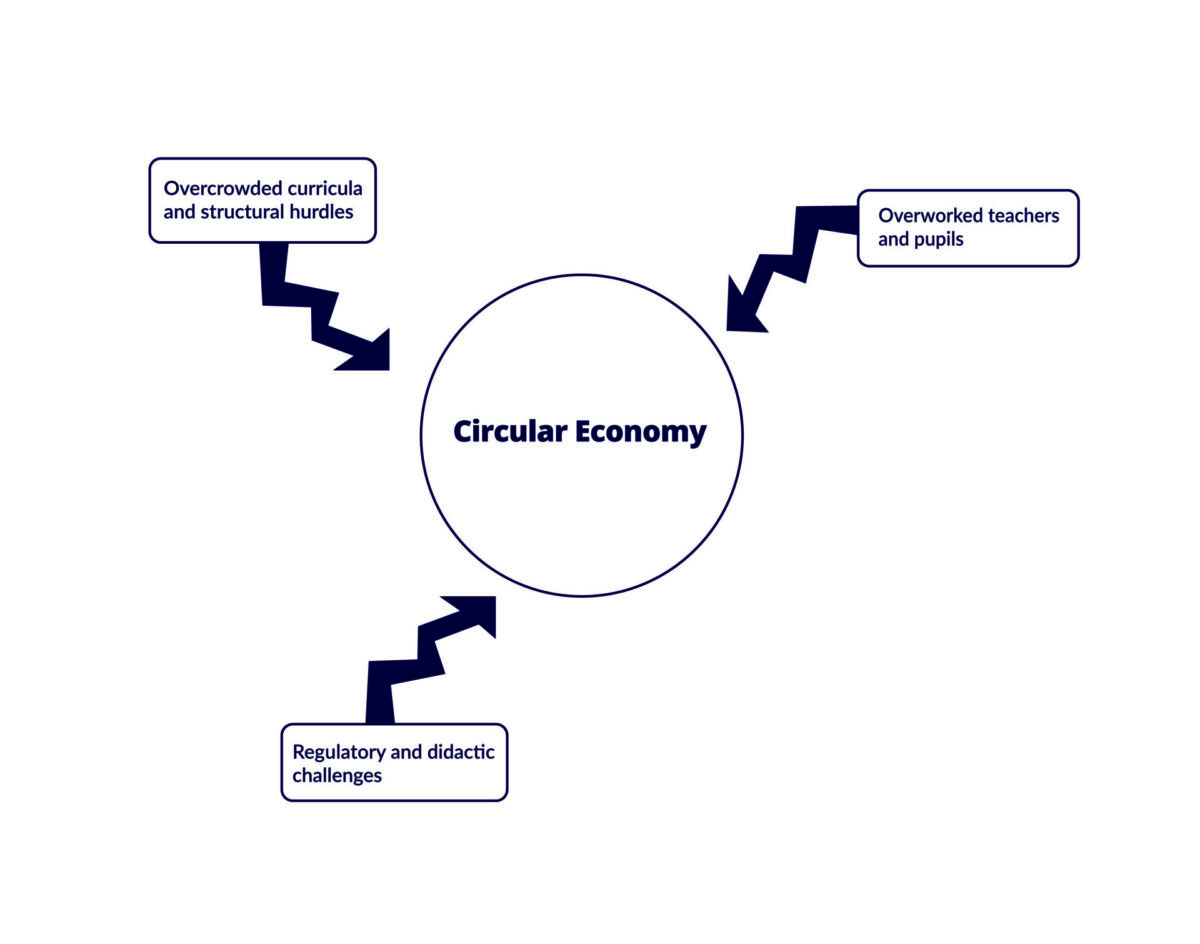
Curricula are already crowded. Teachers face time pressure and high workloads. Regulatory and didactic hurdles are an obstacle to the implementation of educational measures. Hands-on subjects such as textile education where young people can learn repair and upcycle skills are less and less common. All these challenges highlight the urgent need for structural reform. In order to successfully establish circular economy education, practice-oriented didactic concepts and reliable collaborations between schools and external partners must be developed.
Building the bridge
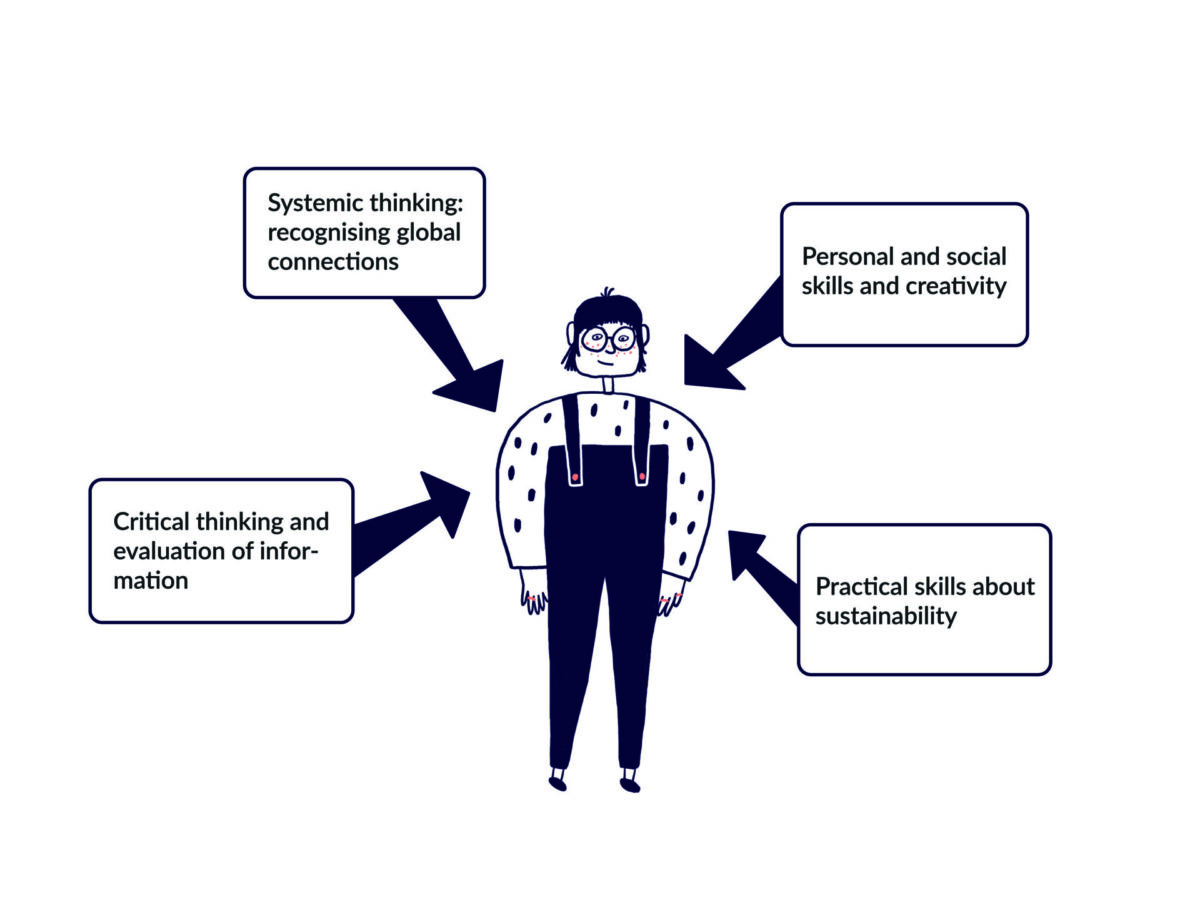
This is where external partners can make a difference. Companies can make valuable contributions by bringing real-life examples and problems into the classroom. By organizing workshops and inviting employees, they ensure practical learning experiences that directly involve students in sustainability topics. Waste management companies can open their doors to students. Start-ups can share how they develop sustainable products. NGOs can provide educational materials. “Make a project that is easy to implement”, as an expert told us. It sounds simple. Perhaps that is exactly the point. Sustainability education does not have to begin with solving the entire climate crisis. It can begin with transforming a T-shirt into a bag or asking students what could be done differently. One workshop is the beginning, but not enough. One campaign can raise awareness, but it is not enough. What young people need is continuity and a space where they can question, try, fail, create and try again. The classroom is a rehearsal for the future. With the help of external partners, schools need to equip their students with critical thinking, social skills, practical skills and systematic thinking.