The way we produce and consume today is based on a linear “take-make-dispose” model where natural resources are extracted, produced and, after use, often disposed of. The circular economy offers a different approach by keeping products and materials in use for as long as possible and reducing waste and pollution. The circular economy can be understood in different ways, with various definitions highlighting why the transition towards this economy is necessary. This article explores the basic idea of the circular economy, the three core principles and the benefits it can bring for the environment, economy and society. It also presents practical examples and highlights some of the challenges that need to be addressed when moving towards a more circular system.
The problem with the linear economy
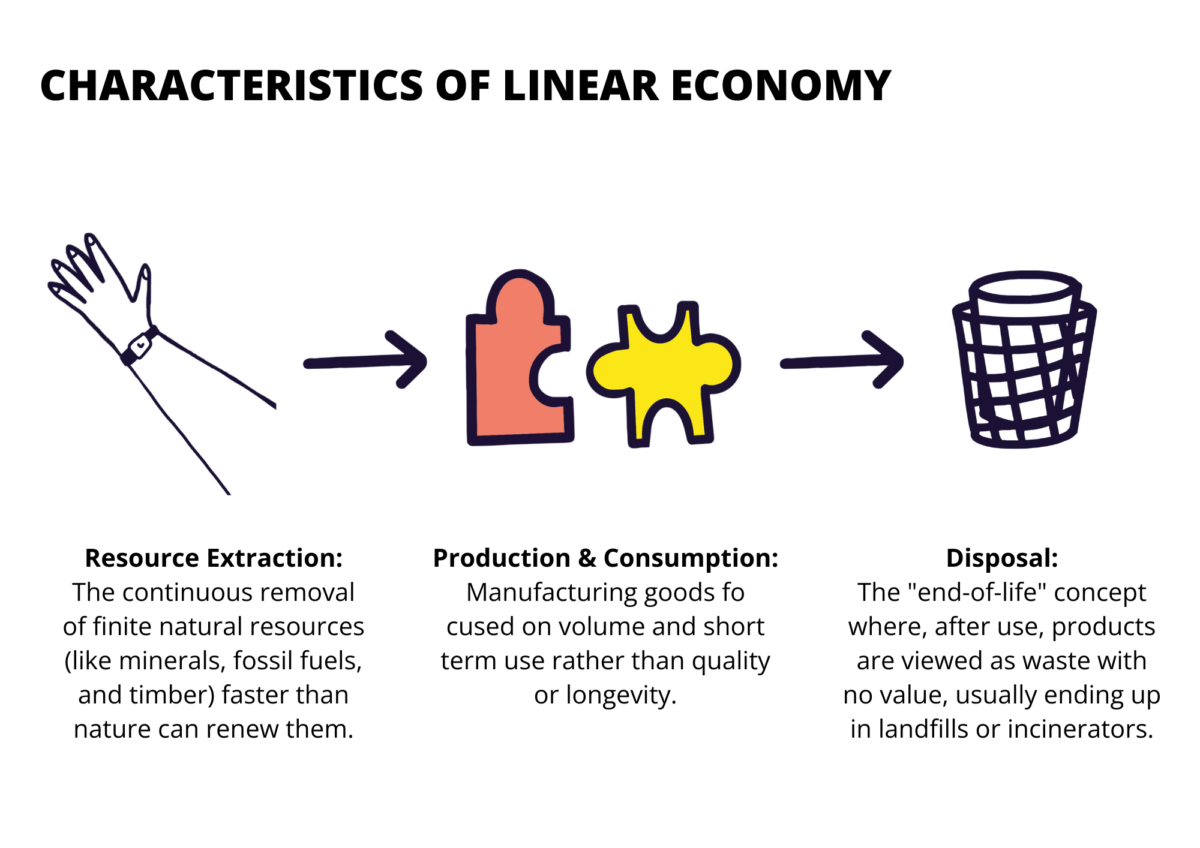
The traditional economic model is often described as the linear economy, or the “take-make-dispose” model. This approach relies on extracting large amounts of cheap materials and energy, resulting in massive waste. Common examples of the linear economy include single-use plastics (items like bottles and straws used once and discarded), fast fashion (clothing produced cheaply and discarded quickly), and disposable electronics (gadgets designed with short lifespans, contributing to massive e-waste). Unfortunately, currently, only a small fraction of the materials we use are ever reused or recycled. This inefficiency drives major global crises, including climate change and resource scarcity.
The many faces of the circular economy
Today, the circular economy is not just about environmental protection. It is about security and resilience. The circular economy is a model of production and consumption that extends the life cycle of products. Rather than seeing a product as something that has a beginning and an end, the circular economy asks us to consider what happens after use. It involves rethinking and redesigning, reusing and sharing, repairing, remanufacturing, and recycling existing materials and products for as long as possible.
The concept is not new; it draws from various theories like Spaceship Earth (Boulding, 1966) and the Performance Economy (Stahel, 1977). However, the modern urgency is different. From a new perspective, the circular economy can help address climate change. Half of global greenhouse gas emissions come from extracting and processing raw materials. Circularity reduces this need. It also contributes to greater strategic autonomy. In a volatile world, relying on other countries for raw materials (like rare metals for batteries) is risky. By recycling materials we already have, regions like the EU become less dependent on imports and more resilient to global shocks.
Three principles of the circular economy
The circular economy is based on three core principles. Collectively, these principles aim to create a sustainable system that benefits businesses, society, and the environment.
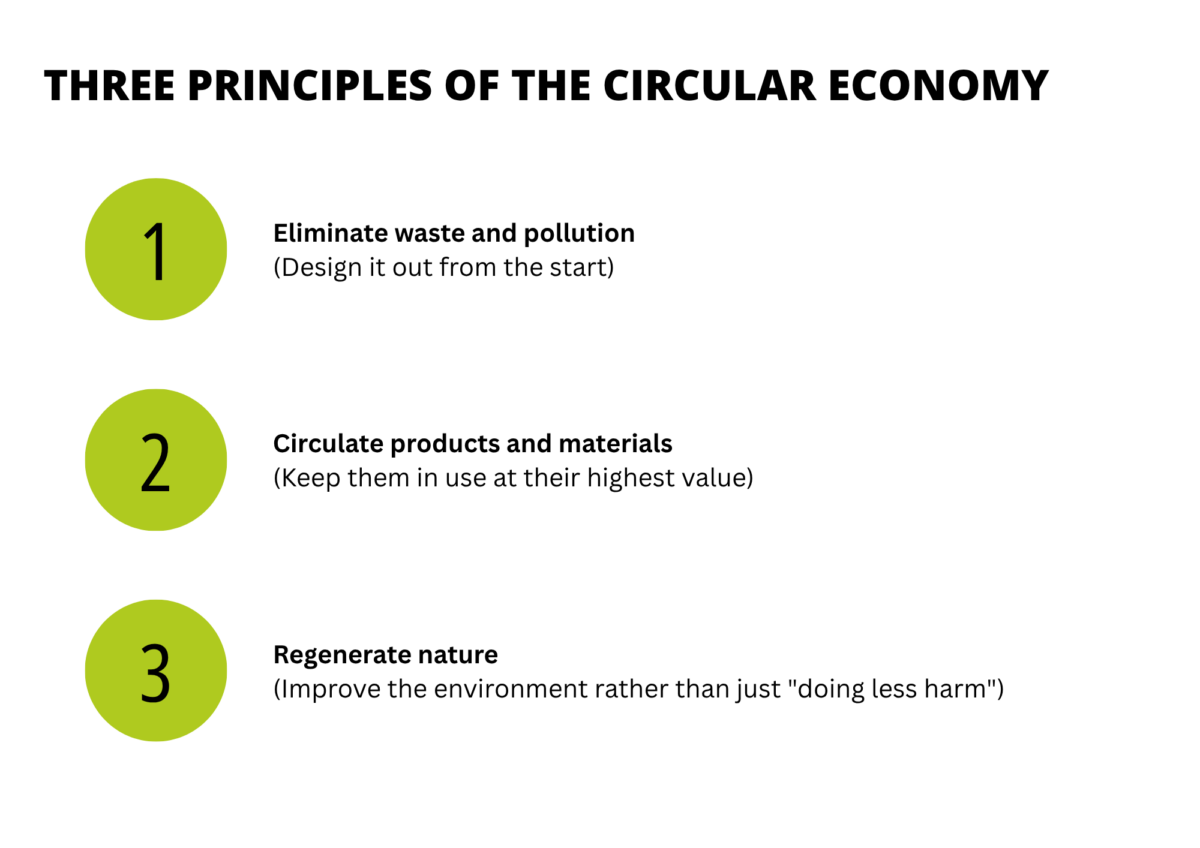
Shifting to this model is a critical step in slowing climate change. One major driver of the climate crisis is how we use natural resources. The United Nations’ International Resource Panel has found that approximately half of all global greenhouse gas emissions come from extracting and processing raw materials. If designed carefully, the circular economy does more than protect the environment. It supports economic growth and promotes social fairness. Sustainability is not just about nature; it is also about ensuring people are treated equitably. The traditional extraction and disposal of resources often have a disproportionate negative impact on vulnerable communities. By reducing waste and using resources more wisely, the circular economy encourages smarter product design, longer use, and the regeneration of nature.
Circularity in practice
The idea of a circular economy can seem abstract when discussed only in terms of resource flows and economic models. However, circular principles can be found in many everyday products and industries. Instead of “fast fashion,” clothes are designed to be durable. Brands offer repair services or resale platforms to keep clothes in use longer. Or in electronics: Modular phones allow you to replace just the broken camera or battery, rather than throwing away the whole device. As well as in construction where builders can recover bricks, metal, and wood from old buildings to use in new ones, reducing the need for new cement and steel.
Easier said than done
A circular word is possible, but the transition is complex. Significant hurdles exist, such as limited knowledge, lack of financing and difficulties in tracking the impact. Not all consumers or businesses understand the benefits yet. At the same time transitioning from cheap and fast to durable and circular requires investment. It is also hard to measure the full environmental footprint of a product (often called Scope 3 emissions) across a global supply chain. Therefore changing individual products is not enough. A sustainable transition requires changes in design, business models, infrastructure and consumer behavior and policy. Instead of asking how quickly we can produce, consume and replace, we should look at how our economic activities can work with, rather than against, the systems that sustain us.